
China’s passport warfare targets Taiwan
Beijing is weaponizing airspace, visas, and border controls to squeeze Taiwanese mobility
Originally printed by Taiwan News Aug. 17, 2026
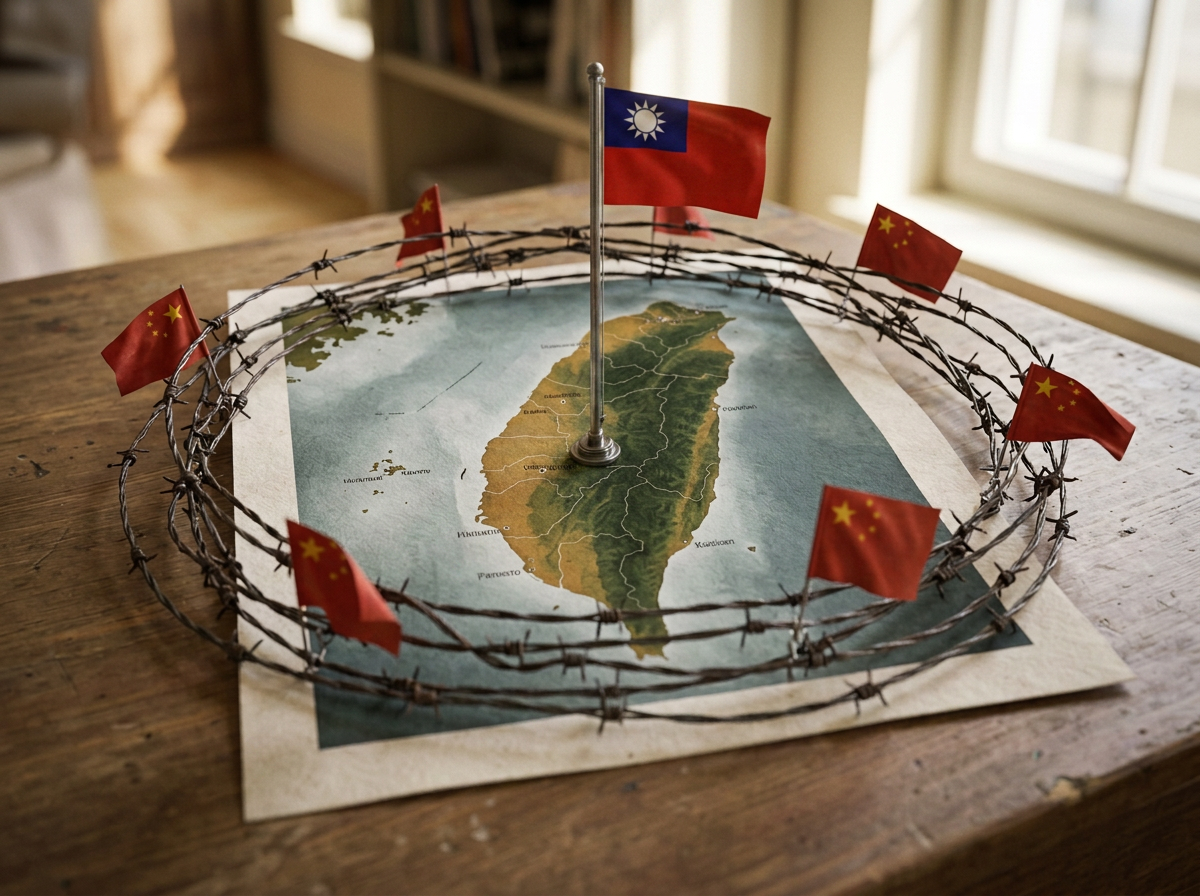
China is turning travel documents, overflight permits, visas, and border checkpoints into weapons in a quiet campaign to isolate Taiwan from the world.
In late April, Seychelles, Mauritius, and Madagascar revoked overflight clearances for President Lai Ching-te’s (賴清德) planned flight to Eswatini under pressure from Beijing. Taipei and Mbabane outmaneuvered the blockade when King Mswati III’s aircraft transported the Taiwanese delegation on a much longer route through friendly airspace, landing safely in Eswatini on May 2.
By July, this containment campaign had begun targeting ordinary citizens. The Moroccan Embassy in Tokyo halted mandatory visa confirmation letters for Taiwanese tourists, forcing Taipei to respond with a reciprocal visa suspension against Moroccan nationals.
In August, Ugandan immigration officers at Entebbe International Airport withheld Taiwanese passports and demanded that Taiwanese travelers produce Chinese passports before their documents would be returned.
These shocks reveal a trend toward “passport warfare” — the weaponization of airspace, transit hubs, visas, and checkpoints to isolate Taiwan. This administrative containment mirrors the coercive diplomatic warfare the Chinese Communist Party aggressively conducts against countries that maintain official relations with Taiwan.
By forcing foreign states to deny transit, entry, or basic document recognition to Taiwanese passport holders, Beijing achieves through bureaucratic pressure what it cannot yet enforce through military might. The result directly undermines cross-strait deterrence and assurance.
The Zero-Tariff Cauldron
These travel restrictions reflect clear geopolitical patterns.
Sovereignty fears drive complete transit blockades in Georgia and Moldova, where governments fear legitimizing breakaway regions and have strong reasons to please Beijing. Economic dependencies dictate entry bans in Venezuela and Azerbaijan, while Chinese investment in Morocco’s Tangier Tech Smart City forms part of the broader context for Rabat’s recent visa freeze.
Elsewhere, proxy disputes dictate borders, as Somalia has barred Taiwanese travelers in retaliation for Taipei’s ties with Somaliland.
This African containment stems from a unified economic carrot. On Feb. 14, during the 39th African Union Summit, Chinese leader Xi Jinping announced a unilateral zero-tariff policy for 53 African nations, effective May 1.
Eswatini, Taiwan’s only diplomatic ally in Africa, was the sole African country excluded from Beijing’s duty-free umbrella.
In exchange, African leaders have increasingly aligned their borders and diplomatic language with Beijing. Recent joint declarations with hardline dependents such as Zimbabwe, Equatorial Guinea, Algeria, and the Democratic Republic of the Congo have dropped historical language endorsing a peaceful resolution of cross-strait relations.
By stating only that Taiwan is an inalienable part of Chinese territory and omitting references to peace, these accords grant diplomatic cover to a future military blockade.
Deterrence, Assurance, and Silkworms
International relations theory holds that deterrence relies on raising the costs of aggression, while assurance guarantees that maintaining the status quo preserves security.
Beijing’s passport warfare subverts this balance through consular and airspace deterrence. It creates a gray-zone barrier to prove that standard travel can result in immediate logistical stranding.
This behavior embodies the Chinese idiom 蠶食鯨吞, or “to nibble away like a silkworm before swallowing like a whale.”
Avoiding hot war, Beijing relies on the silkworm’s patience. It pressures civil aviation systems, border authorities, and travel-document databases to make Taiwanese mobility appear abnormal, disputed, and administratively inconvenient.
Squeezing access in isolated hubs gradually conditions the world to accept Taiwan’s isolation. Once this erasure is normalized, the strategy can shift to the whale’s swallow: collapsing status quo assurances and eliminating Taiwan’s international presence entirely.
The Expanding Gray-Zone Grid
This containment has expanded beyond historic non-recognition blocks, combining passport warfare and legal pressure into a unified lawfare campaign.
In South Africa, Pretoria excluded Taiwan from its automated e-visa platform and demanded that Taiwan move its liaison office from Pretoria to Johannesburg, treating travel access and representation as concessions to Beijing.
In China’s own legal system, the CCP has expanded extraterritorial threats. Taiwan’s Mainland Affairs Council has raised concerns over Article 63 of China’s Ethnic Unity and Progress Promotion Law, which targets overseas organizations and individuals accused of undermining ethnic unity or promoting separatism.
At the same time, Chinese judicial guidelines on “Taiwan independence” have turned travel through China and China-aligned states into a growing risk for Taiwanese, overseas Taiwanese, and foreign supporters of Taiwan.
Thailand and South Korea have also intensified screening of Taiwanese arrivals under the pretext of fighting transnational fraud, demonstrating how ordinary border enforcement can be turned into broader friction against Taiwanese mobility.
Uganda’s August passport seizures show the campaign’s most blunt form. Ugandan immigration officers at Entebbe withheld Taiwanese passports, demanded Chinese passports, and in earlier cases detained or deported Taiwanese travelers.
Foreign nationals are not immune. Western and other foreign passport holders who renew documents through trade offices or de facto embassies in Taipei can face denial or heightened scrutiny at Chinese checkpoints when “Taipei” appears as the place of issue. In China’s political reading of travel documents, even a neutral administrative field can become a sovereignty trap.
The same pattern appears in paperwork erasure. Serbia and Bolivia process visas for Taiwanese on loose sheets of paper, while Jamaica requires travelers to purchase a separate affidavit of identity to avoid creating an official administrative record on a Taiwanese passport.
The September Entry and Exit Codes
The structural normalization of passport warfare is arriving through China’s sweeping new entry and exit regulation, State Council Decree No. 841, which takes effect Sept. 15.
The 19-article regulation gives Beijing broader administrative tools to refuse entry, cancel transit, restrict exit, demand supporting documents, require electronic data, and impose entry bans on people accused of violating vague border or national-security classifications.
This codifies a weapon-ready architecture for gray-zone border control.
Under the new regulation, border officers and visa authorities can demand documents, materials, and electronic data when verifying a traveler’s identity or stated purpose of travel. False materials or statements can be used to deny entry or exit documents, refuse entry, or impose bans of one to five years.
The system gives Beijing more tools to punish travelers whose identities, documents, political views, or links to Taiwan are deemed irregular.
Because Beijing routinely treats Taiwanese as Chinese citizens under its domestic administrative practices, these measures could be selectively applied to Taiwanese tech workers, academics, businesspeople, activists, and public figures traveling to or from China.
What appears to be a border-management rule is in practice another tool for ideological compliance.
The Democratic Counterstrike
To neutralize this strategy, Taiwan and its allies must establish diplomatic counter-deterrence.
First, democratic partners should impose immediate diplomatic costs on states that target Taiwanese travelers. Taiwan’s July 30 reciprocal visa suspension against Morocco offers a model.
If a state bans Taiwanese transit, withholds passports, or enforces discriminatory entry rules under Beijing’s pressure, the US, EU, Japan, Canada, Australia, and other partners should respond with bureaucratic delays, reciprocal scrutiny, or restrictions on electronic visa access for that country’s officials.
Second, allies must mobilize multilateral aviation protections.
Beijing’s airspace coercion violates the apolitical spirit of the Chicago Convention on International Civil Aviation. Western allies should explicitly extend freedom-of-navigation principles to civil aviation by guaranteeing alternative routes, priority transit, diplomatic escorts, or emergency logistical support for Taiwanese officials facing blockade attempts.
Eswatini’s royal-jet intervention showed that Beijing’s airspace choke points can be broken. The democratic world should systematize that lesson before the next attempted blockade.
Third, allies should establish pre-cleared sovereign whitelisting.
The US, Canada, UK, and Schengen Area should integrate Taiwan into automated, depoliticized biometric corridors such as Global Entry, SmartGate, and similar trusted-traveler systems. Bypassing manual embassy checks protects travelers from localized diplomatic pressure.
This automation is urgent. As the Uganda passport seizures show, Taiwan often lacks local embassies and must route emergency support through remote offices, such as its representative office in Somaliland.
Automated and trusted systems would make Taiwan’s global mobility harder to break, even under China’s incoming Sept. 15 border rules.
A Global Blueprint for Erasure
Passport warfare is an existential threat disguised as paperwork.
The institutional foundations for this global containment were codified during the 2024 Forum on China-Africa Cooperation meeting in Beijing, where every participating African head of state except Eswatini declared support for China’s “national reunification” narrative and “all efforts by the Chinese government” to achieve the goal.
Driven by Beijing’s economic leverage, this language fuels the silkworm’s first nibble, expanding the blockade into a systemic global consular net.
In Southeast Asia, staunch Beijing allies such as Cambodia and Laos have weaponized visa infrastructure by tightening restrictions on Taiwanese nationals while offering broader entry privileges to Chinese citizens.
In South America, China has used expanded visa-waiver frameworks with core trade partners such as Brazil, Argentina, and Peru to encourage compliance with Beijing’s passport and sovereignty demands, increasingly choking off standard entry procedures for Taiwanese travelers.
Normalizing a world where autocrats dictate international transit does not prevent conflict. It accelerates the whale’s final swallow.
If the democratic world fails to break Beijing’s consular blockade today, its own freedom of movement will be held hostage tomorrow.
